The Modern GTM Tech Stack in 2026: What High-Performing Revenue Teams Actually Use
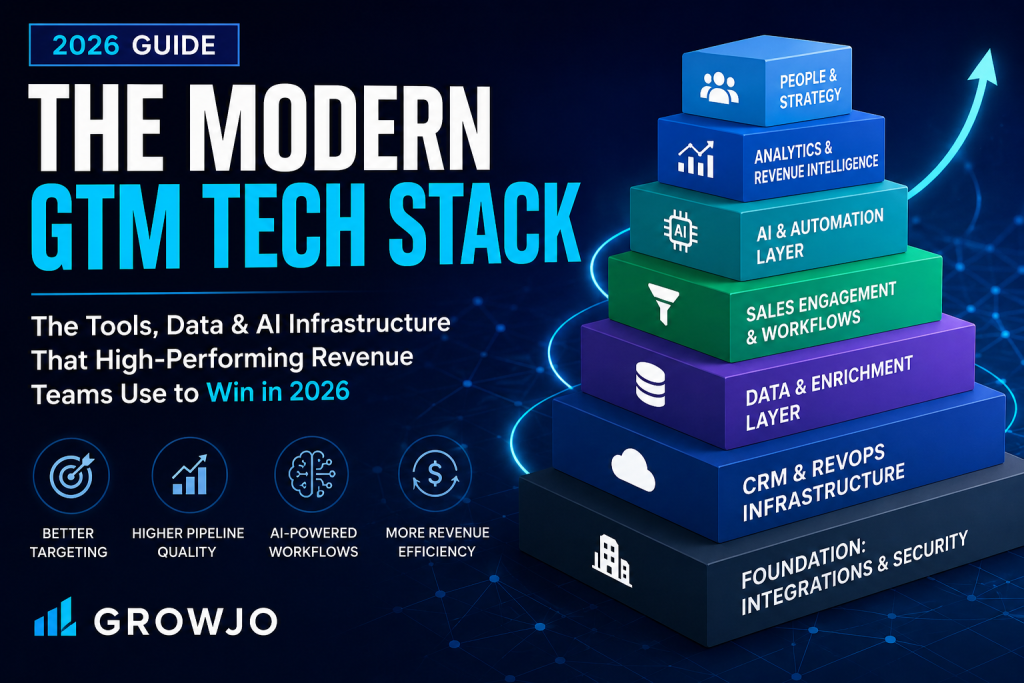
The modern GTM tech stack has changed dramatically over the last several years. What used to be a relatively simple combination of CRM software, outbound sequencing tools, and marketing automation platforms has evolved into a highly interconnected revenue infrastructure layer powered by AI, intent data, workflow orchestration, enrichment systems, and RevOps analytics.
As outbound sales becomes more competitive and customer acquisition costs continue rising, high-performing GTM organizations are increasingly prioritizing:
- Signal-based prospecting
- Intent-driven targeting
- CRM enrichment
- AI-assisted workflows
- Revenue operations alignment
- Deliverability optimization
- Real-time analytics
- Workflow automation
In 2026, the best GTM stacks are no longer built around isolated tools. They function as unified operational systems connecting:
- Sales
- Marketing
- RevOps
- Customer success
- Product analytics
- Business intelligence
Quick Summary
- Modern GTM stacks increasingly revolve around RevOps infrastructure instead of disconnected point solutions
- Intent data and signal-based prospecting are becoming foundational outbound layers
- AI is accelerating personalization, enrichment, and workflow automation
- Deliverability and data quality are becoming critical competitive advantages
- Revenue teams increasingly prioritize workflow orchestration over tool accumulation
- The future GTM stack is centered around timing, precision, and operational efficiency
Table of Contents
What Is a GTM Tech Stack?
A GTM (Go-To-Market) tech stack is the collection of software, workflows, data systems, and operational infrastructure used by revenue teams to generate pipeline, manage customer relationships, improve forecasting, and drive revenue growth.
Modern GTM stacks typically include:
- CRM systems
- Sales engagement platforms
- Intent data providers
- Enrichment tools
- Marketing automation software
- Revenue intelligence platforms
- AI prospecting systems
- Analytics infrastructure
- RevOps workflows
The goal is no longer simply automating outbound activity. High-performing organizations increasingly focus on building unified systems capable of improving:
- Targeting precision
- Timing
- Data quality
- Pipeline efficiency
- Forecast visibility
- Cross-functional alignment
Why GTM Stacks Are Changing So Quickly
Several major industry shifts are rapidly changing how GTM infrastructure is built:
- AI-generated outbound noise
- Higher customer acquisition costs
- Declining cold email response rates
- Deliverability challenges
- Data decay
- Increasing operational complexity
- Growing pressure for pipeline efficiency
Modern GTM teams increasingly prioritize operational precision over outbound volume.
This shift is causing many organizations to move away from fragmented tool stacks and toward integrated revenue infrastructure systems centered around:
- Intent signals
- Workflow orchestration
- CRM enrichment
- Revenue analytics
- RevOps alignment
Core Components of the Modern GTM Stack
| Layer | Purpose |
|---|---|
| CRM | Central customer and pipeline system |
| Sales Engagement | Outbound sequencing and workflow automation |
| Intent Data | Buying signals and timing intelligence |
| Enrichment | Verified emails, direct dials, firmographics |
| RevOps | Revenue alignment and operational systems |
| AI Infrastructure | Personalization, prioritization, automation |
| Analytics | Forecasting, attribution, performance visibility |
| Marketing Automation | Campaign orchestration and nurturing |
The CRM Layer
CRM systems remain the operational center of most modern GTM stacks.
Popular platforms include:
- Salesforce
- HubSpot
- Microsoft Dynamics
- Pipedrive
- Zoho CRM
However, the role of the CRM is changing. Instead of functioning solely as a database of customer records, modern CRMs increasingly operate as:
- Revenue operating systems
- Workflow orchestration layers
- Cross-functional collaboration hubs
- Forecasting infrastructure
- Automation centers
This broader operational role is one reason RevOps teams are becoming increasingly important across modern SaaS organizations.
Intent Data & Signal-Based Prospecting
One of the biggest changes in modern GTM infrastructure is the rise of intent-driven prospecting.
Traditional outbound strategies focused heavily on building large contact lists and maximizing outbound volume. Modern GTM teams increasingly prioritize:
- Buying signals
- Hiring growth
- Funding activity
- Technology adoption
- Market expansion
- Executive changes
This broader shift is helping drive rapid adoption of:
- Intent data systems
- Signal-based prospecting workflows
- Technographic targeting
- Predictive scoring models
Related reading: What Is Intent Data?
Additional industry research: Signal-Based Prospecting Guide
The Rise of AI in GTM Infrastructure
AI is rapidly reshaping modern GTM workflows.
Many organizations now use AI to assist with:
- Outbound personalization
- Lead prioritization
- Conversation analysis
- CRM enrichment
- Workflow automation
- Sales forecasting
- Pipeline analysis
At the same time, AI-generated outbound noise is creating new challenges around:
- Inbox saturation
- Deliverability
- Buyer trust
- Personalization quality
AI is simultaneously increasing outbound efficiency and making precision targeting more important than ever.
As AI-generated outreach becomes more common, verified data quality and signal-driven targeting are becoming increasingly valuable competitive advantages.
Why RevOps Is Becoming the Operational Center of Modern GTM Teams
Revenue Operations (RevOps) is becoming one of the most important functions inside modern SaaS organizations.
Instead of allowing sales, marketing, and customer success teams to operate independently, RevOps teams increasingly unify:
- Data infrastructure
- Forecasting systems
- Attribution models
- Workflow automation
- Pipeline management
- Revenue analytics
This shift is helping organizations improve:
- Forecast accuracy
- Pipeline efficiency
- Operational visibility
- Cross-functional alignment
- Revenue predictability
Modern GTM stacks increasingly revolve around RevOps infrastructure instead of isolated departmental tools.
Why Deliverability & Data Quality Matter More Than Ever
Deliverability has quietly become one of the most important competitive advantages in outbound sales.
Poor-quality contact data can dramatically increase:
- Bounce rates
- Spam complaints
- Domain reputation damage
- Email filtering issues
- Outbound inefficiency
As a result, modern GTM teams increasingly prioritize:
- Verified business emails
- Direct dial accuracy
- Continuous enrichment
- Intent-driven targeting
- CRM hygiene
This broader industry shift is helping drive increased investment into:
- Enrichment platforms
- Verification systems
- Signal-based prospecting
- Deliverability infrastructure
Related research: How to Fix High Bounce Rates
The Future of the GTM Tech Stack
The future GTM stack is increasingly centered around:
- Workflow orchestration
- AI-assisted automation
- Real-time enrichment
- Intent-driven targeting
- Predictive analytics
- Revenue intelligence
- Operational alignment
Over the next several years, high-performing GTM teams will likely prioritize:
- Precision over volume
- Signal quality over database size
- Integrated workflows over disconnected tools
- Revenue efficiency over activity metrics
The modern GTM stack is evolving from a collection of sales tools into a unified revenue operating system.
Frequently Asked Questions About the Modern GTM Tech Stack
What is a GTM tech stack?
A GTM (Go-To-Market) tech stack is the collection of software, workflows, data systems, analytics infrastructure, and operational platforms used by sales, marketing, RevOps, and customer success teams to generate revenue and improve pipeline efficiency.
Modern GTM stacks typically include:
- CRM systems
- Sales engagement platforms
- Intent data providers
- Enrichment systems
- AI prospecting tools
- Marketing automation software
- Revenue intelligence platforms
- Analytics infrastructure
- Workflow orchestration systems
The modern GTM stack is no longer just a collection of disconnected sales tools. High-performing revenue teams increasingly treat their GTM stack as a unified operational system designed to improve:
- Targeting precision
- Pipeline efficiency
- Forecast visibility
- Cross-functional alignment
- Revenue predictability
Why are modern GTM stacks changing so quickly?
Several major market shifts are rapidly changing how revenue organizations build GTM infrastructure:
- AI-generated outbound noise
- Rising customer acquisition costs
- Declining cold email response rates
- Deliverability challenges
- Growing operational complexity
- Increasing pressure for pipeline efficiency
- Rapid B2B data decay
Traditional outbound systems built around mass-volume prospecting are becoming less effective. Modern GTM teams increasingly prioritize:
- Intent-driven targeting
- Signal-based prospecting
- Workflow automation
- AI-assisted personalization
- Revenue operations alignment
- Real-time enrichment
The modern GTM stack is shifting from “more activity” toward “better timing, cleaner data, and operational precision.”
What are the most important components of a modern GTM stack?
Most modern GTM stacks are built around several core infrastructure layers:
| Layer | Primary Function |
|---|---|
| CRM | Pipeline and customer relationship management |
| Sales Engagement | Outbound sequencing and automation |
| Intent Data | Buying signals and prospect prioritization |
| Enrichment | Verified emails, direct dials, firmographics |
| RevOps | Revenue operations and workflow alignment |
| AI Infrastructure | Automation, forecasting, personalization |
| Analytics | Forecasting, attribution, reporting |
| Marketing Automation | Campaign orchestration and lead nurturing |
The highest-performing GTM teams increasingly prioritize integration and operational alignment between these systems instead of simply accumulating more tools.
What role does CRM software play in a GTM stack?
CRM systems remain the operational center of most modern GTM stacks.
Popular CRM platforms include:
- Salesforce
- HubSpot
- Microsoft Dynamics
- Pipedrive
- Zoho CRM
However, the role of CRM systems has evolved significantly. Modern CRMs increasingly function as:
- Revenue operating systems
- Forecasting infrastructure
- Workflow orchestration hubs
- Cross-functional collaboration platforms
- Automation layers
Instead of simply storing contact records, modern CRM infrastructure increasingly powers the operational foundation of the entire revenue organization.
What is signal-based prospecting?
Signal-based prospecting is a modern outbound strategy focused on timing and operational change instead of static lead list generation.
Rather than targeting random companies, signal-based outbound teams prioritize businesses actively showing signs of:
- Buying intent
- Rapid growth
- Operational scaling
- Technology adoption
- Funding activity
- Executive leadership changes
- Market expansion
This approach allows sales teams to improve:
- Targeting precision
- Reply rates
- Pipeline quality
- Outbound efficiency
- Sales timing
Many modern GTM stacks now integrate intent data directly into CRM workflows, outbound systems, and AI-driven prioritization models.
Why is intent data becoming so important in modern GTM infrastructure?
Intent data helps revenue teams identify companies actively showing signs of potential purchase behavior.
Instead of relying entirely on static databases, modern sales organizations increasingly prioritize companies showing:
- Research activity
- Funding announcements
- Hiring growth
- Technology adoption
- Content engagement
- Market expansion
Intent-driven prospecting helps GTM teams focus on:
- Timing
- Prioritization
- Relevance
- Pipeline efficiency
- Higher-quality outreach
As inbox competition increases, many outbound organizations now view timing intelligence as more valuable than sheer outbound volume.
How is AI changing the modern GTM stack?
AI is rapidly transforming how modern revenue organizations operate.
Many GTM teams now use AI for:
- Outbound personalization
- Lead scoring
- Conversation analysis
- Workflow automation
- Forecasting
- CRM enrichment
- Pipeline prioritization
- Sales coaching
At the same time, AI-generated outbound messaging is increasing inbox saturation and reducing the effectiveness of generic prospecting campaigns.
This paradox is making:
- Verified data
- Intent signals
- Personalization quality
- Deliverability optimization
more important than ever.
AI is simultaneously increasing outbound efficiency while making precision targeting dramatically more important.
What is RevOps and why is it becoming central to GTM teams?
Revenue Operations (RevOps) is the operational framework that aligns:
- Sales
- Marketing
- Customer success
- Analytics
- Revenue forecasting
RevOps teams increasingly manage:
- CRM infrastructure
- Attribution systems
- Revenue analytics
- Pipeline management
- Automation workflows
- Forecasting infrastructure
- Data hygiene
Modern GTM organizations increasingly rely on RevOps teams to improve:
- Cross-functional alignment
- Revenue predictability
- Operational efficiency
- Forecast visibility
- Pipeline consistency
This is one reason RevOps is becoming one of the fastest-growing operational functions inside SaaS organizations.
Why is deliverability becoming such a major GTM issue?
Deliverability has become one of the most important competitive advantages in outbound sales.
Mailbox providers are becoming increasingly aggressive about filtering low-quality outbound email campaigns.
Poor-quality contact data can dramatically increase:
- Bounce rates
- Spam complaints
- Domain reputation damage
- Inbox placement issues
- Outbound inefficiency
As a result, modern GTM stacks increasingly prioritize:
- Verified business emails
- Continuous enrichment
- CRM hygiene
- Intent-driven targeting
- Deliverability monitoring
Many organizations are now shifting away from pure outbound volume strategies toward precision-focused prospecting models.
What is data enrichment in a GTM stack?
Data enrichment is the process of improving CRM and prospect records with additional information such as:
- Verified emails
- Direct dials
- Job titles
- Company size
- Revenue estimates
- Technographic data
- Intent signals
- Funding activity
Enrichment systems help GTM teams improve:
- Targeting precision
- Outbound personalization
- CRM accuracy
- Lead scoring
- Segmentation quality
As B2B data decays rapidly, continuous enrichment is becoming increasingly important across modern revenue organizations.
What is technographic data?
Technographic data identifies the technologies and software platforms a company currently uses.
Examples include:
- Salesforce
- HubSpot
- AWS
- Shopify
- Snowflake
- Marketo
- Microsoft Dynamics
GTM teams often use technographic targeting to:
- Improve personalization
- Identify integration opportunities
- Segment accounts
- Prioritize ICP matching
- Build competitive positioning
Many modern outbound workflows combine technographic data with intent signals for higher targeting precision.
What does the future GTM stack look like?
The future GTM stack is increasingly centered around:
- AI-assisted workflows
- Real-time enrichment
- Intent-driven targeting
- Workflow orchestration
- Predictive analytics
- Revenue intelligence systems
- Operational automation
- Unified RevOps infrastructure
Over the next several years, high-performing GTM organizations will likely prioritize:
- Precision over volume
- Signal quality over database size
- Integrated workflows over disconnected tools
- Revenue efficiency over activity metrics
- Timing over scale
The modern GTM stack is evolving from a collection of disconnected sales tools into a unified revenue operating system.
What should companies prioritize when building a modern GTM stack?
The most effective GTM stacks are built around operational alignment and workflow efficiency rather than sheer tool quantity.
Most organizations should prioritize:
- CRM cleanliness
- Data quality
- Workflow integration
- Intent-driven targeting
- RevOps alignment
- Deliverability monitoring
- Analytics visibility
- Automation scalability
Modern GTM performance increasingly depends on how efficiently systems work together instead of how many individual platforms are added to the stack.